
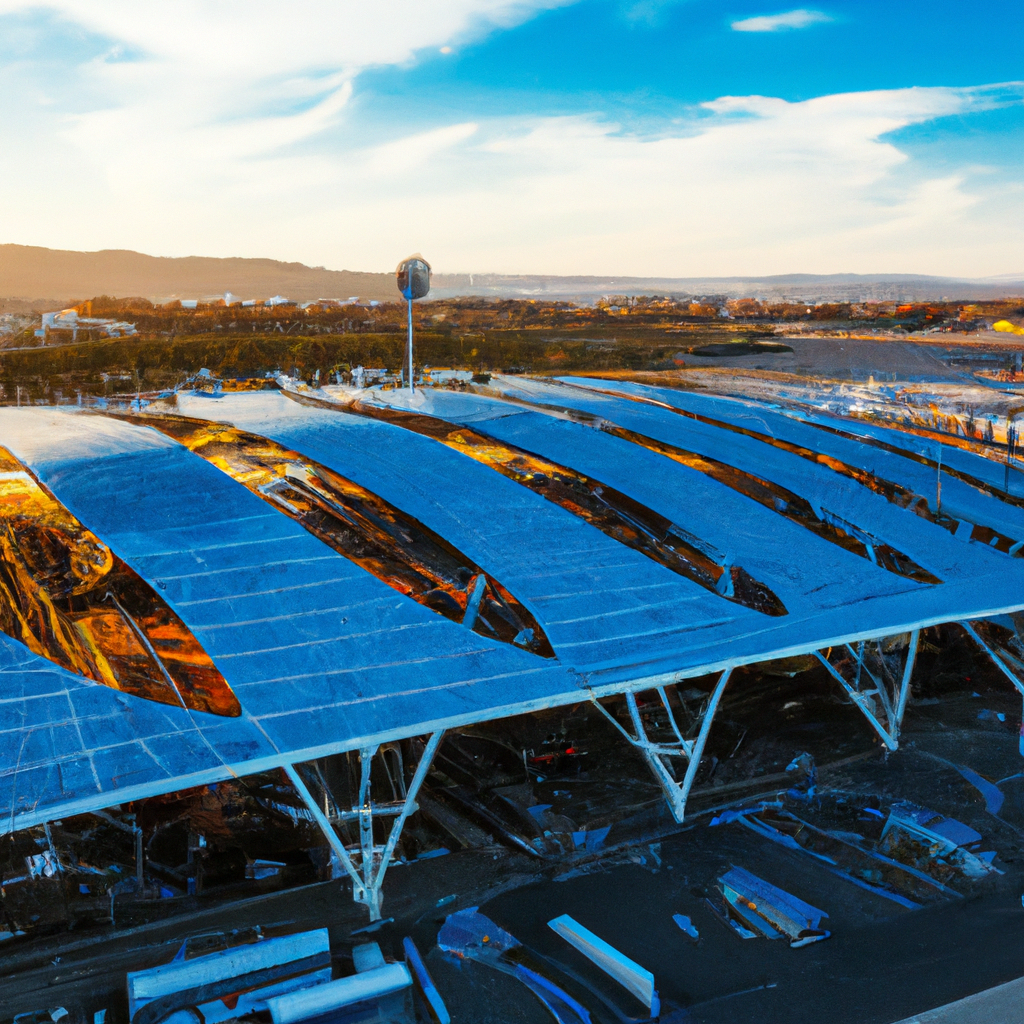
Málaga / 2025-12-18 – A report in Xataka highlights how a recent project at Málaga airport demonstrates that the principal technical objection many airports raised against photovoltaic installations —pilot glare and related operational risk— can be mitigated with mature, cost-effective engineering and regulatory coordination.
Málaga's project acts as a case study showing that historical resistance to airport solar was often a problem of design and policy, not a fundamental limitation of PV technology. Below is a technical breakdown of the issue, the mitigations applied, and what it means for other airports and energy policy.
Why airports historically avoided solar
- Glare: specular reflections from glossy modules can create bright spots in pilots' fields of view during critical approach and departure phases.
- Certification and regulation: aviation authorities require safety assessments and may restrict installations near operational surfaces without robust evidence of no impact.
- Operational concerns: electromagnetic interference, maintenance access in restricted zones, and fire safety near fuel farms are recurring worries.
- Cost and logistics: integrating large PV installations without disrupting operations requires extra design, coordination, and sometimes additional CAPEX.
What Málaga did and why it matters
The core of Málaga's approach (as described in Xataka and reflected in industry practice) is straightforward: instead of avoiding PV, the airport implemented a set of design, modeling and regulatory measures that reduce glare risk to acceptable levels.
Key measures:
-
Low-reflectance modules: textured glass and anti-reflective coatings sharply lower specular brightness. Commercial modules designed for building integration often present much lower albedo than standard flat glass.
-
Orientation, tilt and strategic shading: module tilt and orientation are chosen to avoid reflecting into approach corridors. Fixed-angle structures are favored over single- or dual-axis trackers, which increase reflection variability.
-
Glare risk modelling: heliodon simulations and solar glare hazard analyses map times and directions with potential risk, enabling designers to curate locations and geometries to minimize pilot exposure.
-
Use of dark backsheets and frames near sensitive areas: panels with dark backs reduce lateral glare; opaque BIPV or black modules can be specified where line-of-sight concerns exist.
-
Placement on roofs and canopies: parking canopies and terminal rooftops alter the line of sight relative to approach paths and are often the preferred deployment locations.
-
Regulatory engagement and certification: approvals require site-specific studies demonstrating no material effect on operations. Early collaboration between airport operators, the aviation authority, and system designers is essential.
Cost and ROI implications
Mitigation measures add costs relative to a baseline PV project, but they eliminate regulatory delays and potential operational impacts that can be far more expensive. For many airports, rooftop and canopy installations deliver attractive returns through bill reduction, resiliency (less reliance on diesel generators), and participation in PPAs or green financing.
Is this replicable at other airports?
Yes, conditionally. Málaga's lessons transfer where:
- Authorities accept site-specific glare studies.
- There is available rooftop or canopy space that avoids critical approach visibility.
- Projects use low-glare modules, appropriate geometry, and ongoing monitoring.
The broad claim "airports cannot host solar" glosses over the fact that many barriers are design and regulation problems. Where ground-mounted installations would be too close to flight paths, alternatives such as rooftop generation, off-site PPAs, or dedicated storage can still deliver decarbonization goals.
Remaining risks and operational considerations
- Long-term monitoring: reflection characteristics can change with soiling, damage, or environmental changes, so maintenance and periodic re-evaluation are necessary.
- Wildlife attraction: solar installations can alter avian behavior; airports must integrate wildlife hazard management plans.
- Fire safety and access: designs must allow firefighting access and comply with stricter fire safety planning near fuel storage.
Conclusion
Málaga's case shows that the oft-cited technical barrier to solar at airports—glare—is manageable with current technology and regulatory processes. With rigorous simulation, low-glare components, and integrated design, airports can capture the economic and resiliency benefits of onsite renewable generation without compromising safety.
If applied systematically (through simulation, mitigation, and maintenance), what once was a showstopper can become a clear pathway for accelerating the clean-energy transition in critical infrastructure.
Sources and context: initial reporting by Xataka on the Málaga project; industry best practices for solar glare analysis in aviation contexts; typical regulatory approaches requiring site-specific safety assessments. Compiled on 2025-12-18.
